

The Ecocivilization Coalition is the central strategic initiative of the Institute for Ecological Civilization, a 501(c)(3) non-profit that was founded in 2015.
The Institute arose from the work of scholar and activist John B. Cobb, Jr., a professor at Claremont Graduate University and Claremont School of Theology who wrote the founding work in eco-theology in 1971. It was founded by philosophers and activists Philip Clayton and Andrew Schwartz with a vision to promote civilizational change for the long-term wellbeing of people and the planet, emerging from a major international conference on ecological civilization, “Seizing an Alternative,” that gathered thinkers and practitioners worldwide.
Institute for Ecological Civilization

John B. Cobb, Jr.,

Philip Clayton
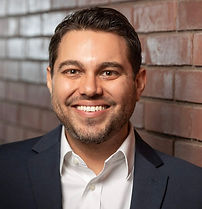
Andrew Schwartz
Foundational Visions and Beliefs
At its core, EcoCiv was built around the idea that the current global trajectory is ecologically and socially unsustainable — and that deep systemic change is needed to address interconnected crises like environmental degradation, inequality, and unjust economies.
Its worldview includes several key principles:
-
Civilizational Change: Humanity’s cultural, economic, and political frameworks must evolve to support flourishing life on Earth.
-
Systems Thinking: Environmental and social crises are linked; solutions must simultaneously address root causes in policy, economics, and culture.
-
Local Global Bridge: Supporting local leaders and communities to develop their own visions — then connecting them with global resources and networks — accelerates meaningful change.
Mission
EcoCiv’s mission emphasized a holistic, participatory approach blending research, practical action, and network building:
-
Support local leaders and communities in identifying and developing their own visions for ecological civilization.
-
Connect these leaders with global knowledge, resources, and allies.
-
Catalyze systemic change by aggregating solutions, fostering collaborations, and scaling effective practices.
Approach
-
Research and theory building on structural causes of ecological and social breakdown.
-
Convening experts, activists, and practitioners to collaborate across disciplines and sectors.
-
Supporting implementation of community-level initiatives (“hubs”) that can be replicated elsewhere.
Programmatic Focus
While EcoCiv’s work was broad, examples of its program areas — based on organizational profiles and descriptions — included:
-
Sustainable economies and wellbeing — advocating for “wellbeing economies” that prioritize human and ecological well-being over GDP growth.
-
Water security and agrifood systems — supporting community-led initiatives to improve water access and regenerative agriculture.
-
Coalition building and policy engagement — forming alliances among nonprofits, governments, and international bodies to promote ecological civilization principles.
Strategic Focus on the Coalition
Beginning in July 2025, the Institute board decided to focus its energy on the aspect of its mission that emphasized catalyzing system change. Its president, Philip Clayton, stepped down after ten years of service, and it appointed Jeremy Lent as acting president.
Much of the work initiated by the Institute in earlier years remains active, and can be discovered in detail in the following archived material:
Institute for Ecological Civilization Board

Mamphela Ramphele,Board chair
Dr Mamphela Ramphele has had a celebrated career as an activist, medical doctor, academic, businesswoman, global public servant and political thinker. Following the Soweto uprising in 1976, she was detained without trial, released after five months and soon afterwards served with an apartheid banning order. She studied medicine at the then University of Natal, has a BCom degree, a Diploma in Tropical Hygiene, a Diploma in Public Health and a PhD in Social Anthropology. She went on to become Vice-Chancellor of UCT, then one of four MDs of the World Bank, based in Washington, DC. Dr Ramphele is the author of several books and publications on socio-economic issues in South Africa. She has received numerous national and international awards acknowledging her scholarship and leading role in spearheading projects for marginalised people in South Africa and elsewhere.
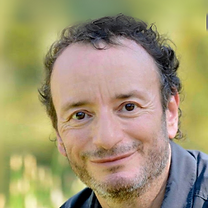
Jeremy Lent, President
Jeremy Lent is an author and speaker whose work investigates the underlying causes of our civilization’s existential crisis, and explores pathways toward a life-affirming future. He is the author of “The Patterning Instinct: A Cultural History of Humanity's Search for Meaning” and “The Web of Meaning: Integrating Science and Traditional Wisdom to Find Our Place in the Universe”. He has written extensively about the vision and specifics of an ecological civilization, and is the founder of the Deep Transformation Network, a global community exploring pathways toward a life-affirming future on a regenerated Earth. His upcoming book, “Ecocivilization: Making a World that Works for All”, will be published by Melville House in May 2026.
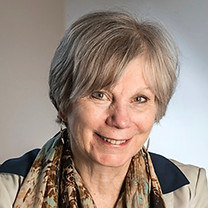
SandraWaddock
Sandra Waddock is Professor of Management, Galligan Chair of Strategy, and Carroll School Scholar of Corporate Responsibility at Boston College Carroll School of Management. She has published more than 180 papers and chapters and sixteen books on issues ranging from corporate responsibility to management education to her current interests in system transformation and stewardship. She is the winner of multiple lifetime achievement awards, including the 2016 Lifetime Achievement CSR Award from Humboldt University and a 2017 PRME Pioneer Award, among others. Her latest book is Catalyzing Transformation: Making System Change Happen.

Mirian
Vilela
Mirian Vilela is the Executive Director of the Earth Charter International Secretariat and the Center for Education for Sustainable Development at UPEACE. She coordinates the UNESCO Chair on Education for Sustainable Development with the Earth Charter and served as a member of the UNESCO Expert Reference Group for the Decade of Education for Sustainable Development. Prior to her work with the Earth Charter, Mirian worked for the United Nations Conference on Environment and Development for two years in preparation of the 1992 UN Earth Summit and a year at the United Nations Conference on Trade and Development. Mirian holds a PhD. in Education from LaSalle University and a Master´s Degree in Public Administration from the Harvard Kennedy School of Government. She is originally from Brazil.

Atossa
Soltani
Atossa Soltani is Director of Global Strategy for the Amazon Sacred Headwaters Alliance, supporting a coalition of 30 Indigenous nations in Ecuador and Peru that aims to protect 35 million hectares of tropical rainforests by establishing a protected region that is off-limits to industrial-scale resource extraction. It advocates a new economic model, under Indigenous peoples’ stewardship, that prioritises the well-being of Indigenous communities, as well as the ecological integrity of the whole bioregion. Atossa is also the Founder and Board President of Amazon Watch, where she served as the first Executive Director for nearly two decades. A native of Iran, Atossa moved to the United States at the age of 13. She holds a B.S. in Public Policy Management from the University of Akron, Ohio.

Song
Li
Song Li is retired as Senior Environmental Specialist, World Bank, Middle East and North Africa Region. She was the Regional Coordinator for the Global Environment Facility or the Middle East and North Africa region. She worked with the United Nations Environment Programme, responsible for the financial mechanism of the Convention on Biological Diversity. Song Li was Director, Division of Environmental Law, Legal Department, Ministry of Foreign Affairs, China. She has an Environmental Law Master’s degree from the Law School, George Washington University; studied at the University Paris III and IIV, France and at the Institute of foreign languages of Beijing, French language, World Economics and History.

Ben
Lasser
Ben Lasser is an advancement professional with over fifteen years of experience in the cultural sector. He has led philanthropic efforts for many New York based arts organizations including BAM, The Shed, Manhattan Theatre Club, and Ars Nova. He lives in Brooklyn, NY with his wife, daughter, and dog where he enjoys barbecuing and baking bread.

Marina Gattás do Nascimento
Marina is a political scientist, specialized in human rights law, with a decade of experience working inside and alongside governments to promote systemic change. Her work at WEAll focuses on supporting the reimagining and redesign of our economies through cultural activations and policy influencing. She’s also co-founder of Outra Economia, WEAll’s Brazilian hub. Prior to WEAll, Marina worked at the Brazilian National Congress, Brava Foundation, CEJIL (Center for Justice and International Law) Mesoamérica, and the NY Bar Association’s Vance Center for International Justice. She has also taught courses in political communications and mentored female candidates through election cycles.